We have started a new series on parables taught by Jesus in one of our Care Cell. As we go through these parables, I am trying to find some practical application to make it more meaning for personal life. I want to start a series 'Parable Lessons' to share what we learn from each parable. I will try to add some observations also.
General information about parables-
Parable:- The Sower and the Soil
Scripture Portion:- Mark 4:3-9; Matt 13:3-9; Luke 8:5-8
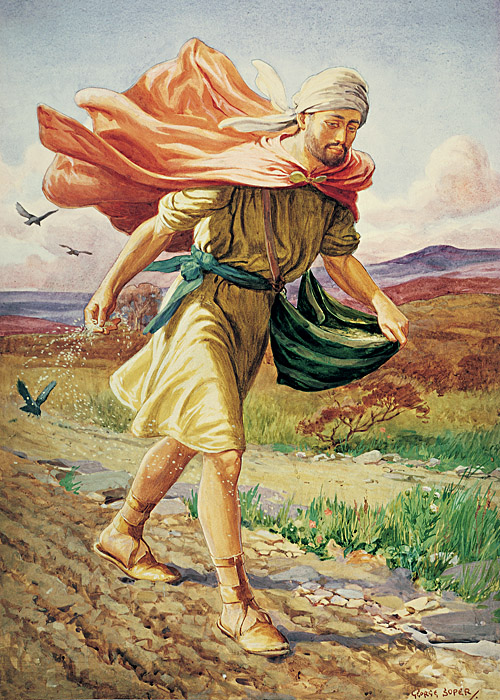
Observations:- The farmer went out to sow his seed. Seeds fell at different places. As he sowed, some fell along the road, and it was trampled under foot, and the birds of the sky devoured it. Other seed fell on the rock, and as soon as it grew, it withered away,because it had no moisture.Other fell amid the thorns, and the thorns grew with it, and choked it.Other fell into the good ground, and grew, and brought forth fruit one hundred times.Only the seeds which fell on good and fertile soil sprouted, grew, and produced a crop that was thirty, sixty, and even a hundred times yield. Jesus later explained that seed that fell on good soil represents those who hear and accept God's word and produce harvest.
Practical Lessons:- We all hear God's word and many times we also accept it. The challenge is that we forget and don't produce any fruit. Everyone faces this challenge. We concluded that we need to be consistent in our spiritual walk to obey and produce fruit. Some decisions people took included being consistent in prayer life, daily morning prayer, meditating on the word etc. Key thing to remember is that it does not matter how many messages we hear. Hearing, accepting it and allowing to word to grow in our life is very important. Then only the fruit will be produced from our life.
General information about parables-
Parable:- The Sower and the Soil
Scripture Portion:- Mark 4:3-9; Matt 13:3-9; Luke 8:5-8
Observations:- The farmer went out to sow his seed. Seeds fell at different places. As he sowed, some fell along the road, and it was trampled under foot, and the birds of the sky devoured it. Other seed fell on the rock, and as soon as it grew, it withered away,because it had no moisture.Other fell amid the thorns, and the thorns grew with it, and choked it.Other fell into the good ground, and grew, and brought forth fruit one hundred times.Only the seeds which fell on good and fertile soil sprouted, grew, and produced a crop that was thirty, sixty, and even a hundred times yield. Jesus later explained that seed that fell on good soil represents those who hear and accept God's word and produce harvest.
Practical Lessons:- We all hear God's word and many times we also accept it. The challenge is that we forget and don't produce any fruit. Everyone faces this challenge. We concluded that we need to be consistent in our spiritual walk to obey and produce fruit. Some decisions people took included being consistent in prayer life, daily morning prayer, meditating on the word etc. Key thing to remember is that it does not matter how many messages we hear. Hearing, accepting it and allowing to word to grow in our life is very important. Then only the fruit will be produced from our life.
Comments